- وزير النقل وزير العمل نضال القطامين يقرر تمديد ساعات الدوام الرسمي في مكاتب ومديريات العمل اعتبارا من السبت 12 أيلول 2026 وحتى الأربعاء 30 أيلول، لتستمر من السبت حتى الخميس حتى الساعة الـ5 مساءً
- إدارة السير تعلن عن تطبيق خطة مرورية مختلفة خلال الفترة المسائية من الخميس، تشمل مراحل ما بعد الظهيرة والفترة المسائية وما بعد العشاء
- إرسال طائرة إخلاء طبي جوي، مزودة بطاقم طبي متخصص من طبابة سلاح الجو الملكي، لإخلاء أردني يبلغ من العمر (27) عامًا من الإمارات ، إثر تعرضه لحادث سير
- استشهاد 4 فلسطينيين وإصابة آخرين، الخميس، إثر قصف قوات الاحتلال الإسرائيلي منزلا في مشروع بيت لاهيا شمالي قطاع غزة.
- المتحدث الرسمي باسم قوات التحالف "تحالف دعم الشرعية في اليمن"، اللواء تركي المالكي، يقول إن الحوثيين نفذوا الأربعاء هجمات باتجاه 3 مدن سعودية
- مجلس محافظي الوكالة الدولية للطاقة الذرية، يقرر الأربعاء، إغلاق الملف المتصل بعدم وفاء سوريا بالتزاماتها
- تسود أجواء معتدلة نهارا في أغلب مناطق المملكة، الخميس، فيما تكون حارّة في البادية والأغوار والبحر الميت والعقبة
Al Karak Faces a Gap Between Planning and Delivery, Urgent Calls for Structural Solutions to Water, Sanitation and Infrastructure Challenges

04/27/2026 - 12:05
A seminar held by Radio Al-Balad in the Karak Governorate shed light on the state of development projects launched in recent years. Participants painted a complex picture combining officially announced completion rates in some sectors with ongoing challenges that continue to hinder any tangible impact on citizens' lives.
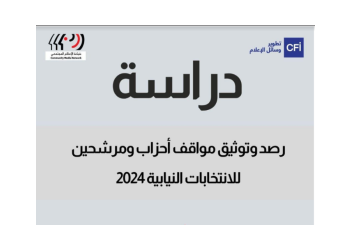
The "Midani" program, broadcast on Radio Al-Balad, hosted an expanded seminar from Karak Governorate, bringing together specialists, former parliamentarians, and local residents to assess the status of government projects announced during the 2024 field visit, and to diagnose the governorate's real needs.
During the seminar, moderated by Mamdouh Al-Hanahneh, Engineer Hussam Al-Karaki, Deputy Director of Decentralized Local Administration, confirmed that the government had implemented a number of projects within previous years' budgets, noting that completion rates in some sectors had reached "good" levels, particularly in infrastructure and basic services projects.
Al-Karaki stated that the 2024 project budget amounted to approximately $8.9 million, with a completion rate of around 65%, including several infrastructure projects such as water network works and vocational training programs, which he said had achieved "high completion rates."
He noted that work continues on completing vital water sector projects alongside vocational and development training programs, pointing out that the main challenge lies in accelerating the pace of implementation and ensuring sustainable funding.
In contrast, Izdihar Faris, member of the Royal Commission for Karak Development, offered a critical assessment of the projects, arguing that some initiatives — particularly in the sewage sector — have remained stalled for years despite being included in government plans and the repeated issuance of tenders.
She explained that the sewage project, which has been discussed since 2019, has seen no real progress on the ground, noting that its estimated cost was reduced without that being reflected in any actual implementation, pointing to procedural and technical problems.
She also highlighted the inequitable distribution of water projects, with some agricultural and residential areas suffering from a clear shortage of wells and supply networks while other areas are adequately served, calling for a reassessment of priorities based on each region's actual needs.
For his part, Dr. Mohammed Al-Omro, a former Member of Parliament, addressed the state of education in the governorate, noting that recent years had seen construction and maintenance projects carried out in a number of schools, along with the addition of new classrooms, contributing to a relative improvement in the educational environment.
He noted that spending on this sector had been significant, but that the continuous rise in student numbers poses additional challenges requiring the expansion of school construction rather than reliance on rented buildings, as well as strengthening routine maintenance and improving the quality of educational services.
Al-Omro also emphasized the importance of education as a fundamental pillar of development, affirming that Karak possesses an important educational and cultural heritage, but that preserving it requires continuous investment in infrastructure and human resources, and aligning educational outcomes with the needs of the labor market.
During the discussion, the water issue emerged as one of the most urgent concerns, with participants noting that the governorate's water networks suffer from severe deterioration dating back decades, resulting in extremely high rates of water loss.
Participants also stressed that the challenge lies not only in launching projects or allocating budgets, but in ensuring their implementation within clear timelines, to high standards, and with effective oversight and accountability mechanisms. They emphasized that the accumulation of incomplete or stalled projects erodes public trust and limits the expected development impact.
Participants noted that Karak Governorate holds promising potential in agriculture, tourism, and local industries, but that realizing these opportunities requires a comprehensive service environment, including advanced infrastructure and stable basic services — most urgently water and sewage.
Participants' Demands and Recommendations
The session concluded with the identification of a set of priorities and key issues affecting the people of Karak, with the aim of bringing them to the attention of decision-makers and following up on them to achieve genuine and sustainable development in the governorate.
Sewage was unanimously identified as one of the governorate's most pressing problems. The entire city — north and south — lacks an actual sewage network, as do the city of Al-Marja and surrounding areas. The project has been planned since 2019 at an initial cost of 22 million euros, later reduced to 11 million. Each year, tenders are issued but never awarded, on the grounds that bids exceed the allocated value, while wastewater flows onto farmland, polluting the environment and threatening public health. Participants demanded immediate completion of this project as a health, tourism, and environmental priority that cannot be postponed, and called for full transparency regarding the true reasons for its delay over six years despite government decisions and royal directives.
On the water front, participants confirmed that existing water networks are over sixty years old, with leakage rates exceeding actual consumption. The distribution of groundwater wells is inequitable, with certain areas monopolizing drilling while others — such as Al-Mazar and Mu'ab — suffer from severe scarcity. They called for comprehensive, not piecemeal, rehabilitation of the networks, and for fair distribution of wells across all parts of the governorate.
In the area of healthcare, participants noted that the Karak Comprehensive Health Center, which serves more than 70,000 people, remains stagnant despite years of promises to upgrade it into a small hospital. Residents of the Jordan Valley area, totaling around 50,000 people, are forced to travel long distances via three modes of transport to reach the Karak Government Hospital. Studies for expanding the government hospital are renewed every year without moving into implementation. Participants demanded the establishment of a genuinely comprehensive health center serving the city and its suburbs, the development of the Jordan Valley center in line with its population density, and the assurance of quality oversight over completed centers to prevent them from being handed over below standard.
Roads and infrastructure took up a large portion of the discussion. Participants expressed serious concern about the neglect of Karak's strategic entry points, particularly the northern entrance, the Wadi Al-Mujib road, and the Jordan Valley–Dead Sea road, which stretches seventeen kilometers without lighting, a central median, or adequate maintenance. They pointed to a legal overlap between the jurisdictions of the Ministry of Public Works and the municipalities within planning boundaries, leaving citizens caught between two bodies each referring them to the other. They called for centralized tenders to fully rehabilitate the Mujib and Jordan Valley roads to tourist-grade standards befitting this vital corridor, and for legislation to resolve the jurisdictional overlap between Public Works and the municipalities.
On tourism, Karak's residents expressed clear bitterness over their governorate's marginalisation despite it possessing nearly 2,000 archaeological and tourist sites, noting that Karak does not appear on official tourist maps and travel guides while Petra, Jerash, and Ajloun dominate the scene. They called for the revival of the old city center by relocating government offices out of it and reopening bank branches and service centers within it, offering incentives to investors who revive old shops dating back to the 19th and 20th centuries, including Karak's archaeological sites in official tourist maps and promotional programs, and accelerating the development project around Karak Castle and Wadi Ibn Hammad.
Regarding education, participants acknowledged tangible efforts in maintenance and construction, but pointed to fundamental problems including slow implementation of school projects, the accumulation of studies without execution, overcrowded classrooms due to growing student numbers, and serious concerns about the spread of drugs in schools and universities. They called for accelerating the completion of stalled school projects and strengthening oversight of the school environment.
On decentralization and governance, participants argued that decentralization as currently practiced amounts to little more than a transfer of titles without any real transfer of authority or budgets, with directors of public works and municipalities in the governorates holding no actual power or sufficient funds, and all decisions ultimately returning to the center in Amman. They demanded that governorate councils be granted real budgets and genuine executive powers.
Concerning employment and investment, participants stressed that government projects implemented to date are mostly short-term service projects that do not create real or sustainable job opportunities, and that the governorate needs large-scale investment projects capable of absorbing unemployed youth, noting that unemployment in Karak exceeds 17%. They called on major companies operating in the area — such as the Arab Potash Company — to play a greater role in hiring local residents and supporting development projects, insisting that the revenues of these companies must be directly and tangibly reflected in the quality of life of Karak's people.
Participants also raised the prominent issue of the sports city in Karak, noting that four royal directives have been issued regarding it over twenty years without it being transformed into an actual sports city. It remains no more than a children's playground and two sports fields, falling far short of the governorate's aspirations and generating virtually no economic activity. They demanded the construction of a fully equipped, genuine sports city to serve as a nucleus for revitalizing the region and providing employment opportunities for youth.
On the subject of youth centers, participants revealed that the youth center in Al-Qasr operates in a rented building for a nominal annual rent of no more than one dinar, and that neither the Ministry of Youth nor the municipality has addressed this situation despite years of complaints. They called for the allocation of proper buildings for youth centers across the governorate instead of relying on dilapidated rented premises.
Regarding historic buildings in Karak's old city center, participants noted that His Majesty the King had issued directives for their maintenance and restoration more than a year and eight months ago, yet local officials have taken no steps to implement these directives. Some of these historically and culturally significant buildings are falling into ruin, including a large historic structure adjacent to the Al-Omari Mosque, parts of whose walls have already collapsed. Participants demanded the immediate activation of restoration and maintenance mechanisms.
Participants also raised the issue of street lighting in the city, confirming that the tourist lighting project — which had once given Karak a distinctive nighttime character — has ceased to function, and that the city now suffers from a shortage of lighting that discourages nighttime commercial activity and deters tourists. They called for the reactivation and development of this project in a manner befitting the city's historical significance.