
- وزير الداخلية، يترأس اجتماع متابعة جاهزية المؤسسات واستعداداتها لاستقبال فصل الشتاء والتحضيرات اللازمة لمواجهة الأحوال الجوية والظروف الطارئة خلال هذا الفصل
- كوادر مديرية دفاع مدني الزرقاء أخمدت أمس حريقاً شب داخل أحد مصانع الدهانات في منطقة الهاشمية بمحافظة الزرقاء نتج عنه إصابة خمسة أشخاص بضيق في التنفس
- وفاة 12شخصا بينهم 5 أطفال، وإصابة 13آخرين، وفقد أكثر من 60 آخرين في حصيلة غير نهائية، إثر انهيار مبنى متصدع من 6 طبقات يؤوي عشرات النازحين في مدينة غزة
- مستوطنون، يحرقون الأربعاء، مسكنا وغرفة زراعية، وخطوا شعارات عنصرية على جدران منازل الفلسطينيين، في قرية التوانة بمسافر يطا، جنوب الخليل، جنوب الضفة الغربية المحتلة
- يكون الطقس الأربعاء، حارا نسبيا فوق المرتفعات الجبلية، وحارًا في باقي المناطق، مع ظهور غيوم على ارتفاعات متوسطة وعالية في جنوب المملكة
Can “Michael” Save Itself? Jaafar Jackson Revives His Uncle’s Legend on Screen
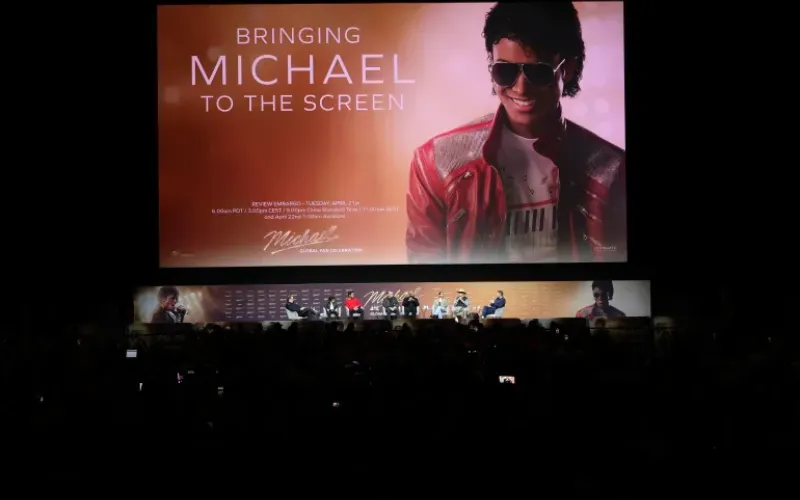
04/26/2026 - 14:31
Michael arrives on screen carrying heavy expectations, yet from its opening moments it clearly chooses its direction: a polished, smooth-edged narrative that leans toward celebration more than complexity. The film does not disguise this approach. Instead, it frames Michael Jackson’s rise as an extraordinary journey stripped of much of its controversy.
This is not unfamiliar territory for Hollywood. Biographical films often compress timelines, reshape events, and streamline detail to serve cinematic rhythm. Here, key stages of The Jackson 5’s early years are condensed, their move from Detroit to Los Angeles is simplified, and major figures such as Janet Jackson are completely absent from the narrative.
More notably, the film avoids engaging with the controversies that surrounded Michael Jackson’s life, including allegations that were widely discussed in public discourse. These elements are either minimized or set aside, as if reserved for a different chapter.
Despite this restraint, the film manages to deliver moments of genuine emotional weight, particularly in its portrayal of a childhood shaped and consumed by early fame. At the center of this is Jaafar Jackson, who delivers a striking performance that captures the essence of Michael, not only in appearance but in movement, voice, and stage presence.
Alongside him, Colman Domingo adds strong dramatic depth through his portrayal of the strict and controlling father. His performance embodies a harsh vision of ambition, where success becomes an uncompromising demand, leaving a lasting psychological imprint on Michael’s journey.
In contrast, supporting characters remain largely in the background. Nia Long appears as the mother with warmth but limited narrative space, Miles Teller has a brief role, and other figures drift as peripheral presences around the central character. Even the Jackson siblings, essential to the group’s origins, are given minimal development.
The film moves rapidly through its key milestones, from intense home rehearsals and early performances to discovery and signing with Motown, followed by the rise to global fame. Major cultural moments such as “Motown 25,” the Thriller album, and the Pepsi commercial incident are presented in quick succession.
This pacing turns the film into more of a highlight reel of achievements than a deeply layered biography. It chooses to illuminate the myth rather than explore the man, presenting Michael Jackson as an iconic global figure rather than a deeply complex individual.
Visually, director Antoine Fuqua delivers a controlled, polished film with a steady rhythm and elegant imagery. However, it largely avoids the grey areas of its subject’s life, prioritizing narrative shine over emotional or moral ambiguity.
In the end, Michael is not a complete biography, but rather a cinematic tribute to an extraordinary artistic legacy. It remembers rather than interrogates, celebrates rather than judges. Still, Jaafar Jackson gives the film its emotional core, injecting enough life and presence to keep the legend of Michael Jackson vividly alive on screen.