- وزير الداخلية، يترأس اجتماع متابعة جاهزية المؤسسات واستعداداتها لاستقبال فصل الشتاء والتحضيرات اللازمة لمواجهة الأحوال الجوية والظروف الطارئة خلال هذا الفصل
- كوادر مديرية دفاع مدني الزرقاء أخمدت أمس حريقاً شب داخل أحد مصانع الدهانات في منطقة الهاشمية بمحافظة الزرقاء نتج عنه إصابة خمسة أشخاص بضيق في التنفس
- وفاة 12شخصا بينهم 5 أطفال، وإصابة 13آخرين، وفقد أكثر من 60 آخرين في حصيلة غير نهائية، إثر انهيار مبنى متصدع من 6 طبقات يؤوي عشرات النازحين في مدينة غزة
- مستوطنون، يحرقون الأربعاء، مسكنا وغرفة زراعية، وخطوا شعارات عنصرية على جدران منازل الفلسطينيين، في قرية التوانة بمسافر يطا، جنوب الخليل، جنوب الضفة الغربية المحتلة
- يكون الطقس الأربعاء، حارا نسبيا فوق المرتفعات الجبلية، وحارًا في باقي المناطق، مع ظهور غيوم على ارتفاعات متوسطة وعالية في جنوب المملكة
Jafar Hassan's government played a role in improving Jordan's role in the Emirati Aqaba Railway project
04/16/2026 - 12:09
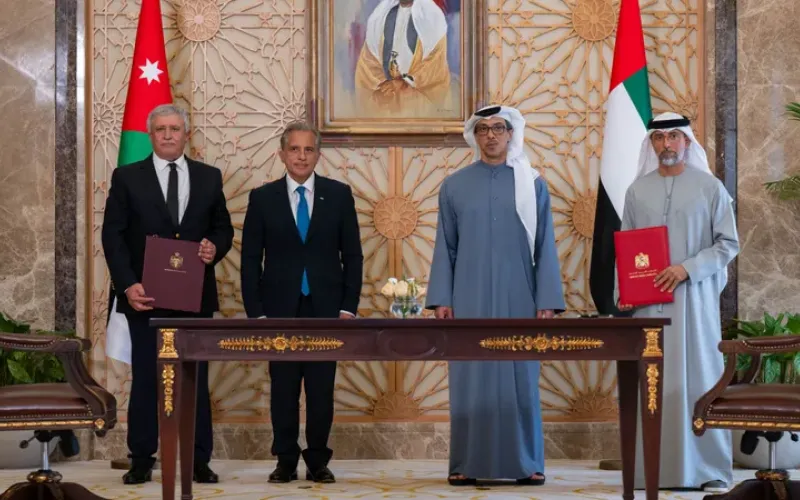
AmmanNet has learned of the significant role played by Jaafar al-Hassan's government in restructuring the Emirati-Jordanian Aqaba Railway investment project, resulting in a 50/50 ownership split and an agreement for the chairmanship of the UAE
board to rotate between Jordan and the UAE
At the beginning of the current government's term, the investment distribution was heavily skewed in favor of the UAE at 65% compared to 35% for Jordan, but the government rejected this arrangement. The government worked to restructure the project, leading to an agreement and the signing of a new company in which the Jordanian and Emirati companies hold a 50/50 share on a 10-member board of directors, with five members each from Jordan and the UAE. The chairmanship of the board will rotate every two years. Shareholders approved this massive investment, knowing that the expected return would be around 7%, significantly lower than the 14-20% yields of most global investment projects. Observers attributed this to the desire of both parties to ensure the success of the strategic project, despite the lower anticipated profit margin. Jordan is represented by the Jordan Phosphate Mines Company, the Arab Potash Company, the Government Investments Management Company, and the Social Security Investment Fund. The United Arab Emirates is represented by Emad Holding Company, the sovereign investment platform of the Abu Dhabi government.
The project focuses on connecting Aqaba to Shadiya and linking the Ma'an land port to national and regional transportation networks. This aligns with Jordan's vision to transform itself into a regional logistics hub, facilitating the movement of goods and investment flows in the region. A governance framework is also in place, including monitoring mechanisms and periodic reports to ensure progress according to set timelines and to balance the interests of both local and foreign investors. Financially, the total cost of the project reached $2.3 billion, distributed across joint capital, with the possibility of additional funding as implementation progresses. In the initial phase, the partnership will establish the joint entity and commence preliminary and engineering work, with an initial estimated expenditure of approximately $600 million at that stage. He also acknowledged that the biggest obstacle in the project is the first phase, due to the challenging topography of the area surrounding Aqaba.
The project represents a key pillar in Jordan's strategy to transform into a logistics hub and connect regional supply chains, while boosting investment and creating local job opportunities. In this context, the minister affirmed the existence of monitoring and oversight mechanisms to ensure the desired economic and social impact is achieved, and to build a transparent and secure investment environment in partnership with the UAE and international allies.