
- شركة الخطوط الجوية الملكية الأردنية، تقول إنها رفعت أسعار التذاكر نتيجة ارتفاع أسعار الوقود وتغيير مسارات الرحلات
- الأجهزة الأمنية تعثر على جثة سيدة عشرينية وطفلتها البالغة من العمر 5 سنوات متوفيتين داخل منزلهما، في ظروف غامضة، في إحدى مناطق البادية الجنوبية بمحافظة معان
- الجمعية الأردنية للماراثونات تعلن عن إغلاق وتحويل حركة السير في عدد من الطرق المؤدية إلى مسارات برومين ألترا ماراثون البحر الميت، غدا الجمعة
- دائرة الأوقاف الإسلامية في مدينة القدس المحتلة تعلن فجر الخميس، عن إعادة فتح المسجد الأقصى المبارك أمام المصلين دون قيود اعتبارًا من صلاة الفجر
- 12 شهيدا و3 جرحى في غارات جديدة لجيش الاحتلال الاسرائيلي على لبنان
- تكون الأجواء الخميس، باردة نسبيا في أغلب المناطق، ودافئة في الأغوار والبحر الميت والعقبة
Must-Visit Places in Jordan
02/09/2026 - 12:31
Jordan is not a mere stop on the map of the Middle East; it is a crossroads of civilizations, where the Nabataeans, Romans, Umayyads, and Ottomans have all left their mark. Within just a few hours’ drive, its diverse landscapes bring together desert, sea, and mountains. Visiting Jordan is not simply a touristic trip, but a complete cultural and human experience. These are the key destinations that make any journey to Jordan truly complete.
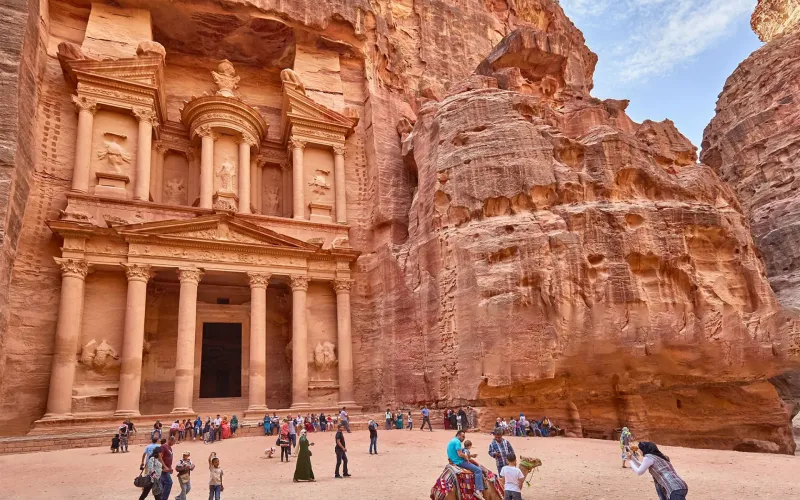
Petra: The Rose-Red City Like No Other
In southern Jordan, Petra lies hidden among rose-colored mountains, a masterpiece shaped by both time and human ingenuity. As you pass through the narrow Siq, the view suddenly opens onto the Treasury in a silent, breathtaking moment. Petra is not a single monument, but an entire city of temples, tombs, and theaters. Every step tells the story of a civilization that mastered the art of adapting to desert life and water scarcity. Visiting Petra requires time and long walks, but every minute is well worth it.
Wadi Rum: A Desert That Feels Like Another Planet
Wadi Rum is far more than a desert—it is a living cinematic landscape. Towering sandstone mountains, colors that shift with the movement of the sun, and a profound silence that commands attention. Here, visitors can ride camels, explore the area in four-wheel-drive vehicles, or spend the night in a Bedouin camp under a sky filled with stars. The place offers a rare sense of solitude and peace, revealing a different face of Jordan far removed from city life.
The Dead Sea: The Lowest Point on Earth
Along Jordan’s western border lies the Dead Sea, offering an experience unlike any other. Its extremely salty waters allow you to float effortlessly, while its mineral-rich mud has become both a therapeutic and touristic ritual. Beyond the physical sensation, there is something deeply striking about standing at the lowest point on the Earth’s surface—a unique meeting of science and geography.
Amman: The City of Hills and Many Faces
Jordan’s capital is not a conventional tourist city, yet it embodies the country’s true spirit. From the Roman Theater in downtown to the Citadel Hill overlooking thousands of years of history, and on to modern neighborhoods reflecting youth and cultural energy, Amman is best discovered on foot—through small cafés and conversations with its people.
Jerash: The Rome of the East
In northern Jordan, Jerash stands as one of the best-preserved Roman cities outside Italy. Its paved streets, columns, plazas, and temples still outline the features of a city that was once a thriving center of life and trade. Walking through Jerash feels like traveling through time, with history becoming tangible beneath your feet.
Aqaba: Jordan’s Window to the Red Sea
Aqaba represents Jordan’s maritime side and is a haven for diving and relaxation enthusiasts. Coral reefs, clear waters, and a mild climate make it an ideal destination for unwinding after exploring historical sites. The city blends leisure and tranquility, offering an experience entirely different from the rest of the country.
Madaba and Mount Nebo: A Mosaic of Faith and History
Madaba is renowned for its Byzantine mosaic maps, most famously the Map of the Holy Land. Nearby, Mount Nebo stands as a religious and historical site overlooking the Jordan Valley. The area is quiet and contemplative, carrying deep symbolic significance for the monotheistic religions, making it an essential stop for visitors seeking spiritual depth.
Ajloun: Northern Greenery and a Fortress of History
Also in the north, Ajloun presents a contrasting image to Jordan’s desert landscapes. Dense forests, a mild climate, and Ajloun Castle—built for defensive purposes during the Islamic era—define the region. It is an ideal destination for nature lovers and hikers, revealing Jordan’s balance between ruggedness and beauty.
Visiting Jordan is an intense journey through time in a short span. It is a country that brings together world-class archaeological sites, contrasting natural landscapes, and a warm, welcoming people who transform the visit into a deeply human experience rather than merely a touristic one. From Petra to Amman, from desert to sea, Jordan presents itself quietly—yet its impact lingers long after the journey ends.