- وزير النقل وزير العمل نضال القطامين يقرر تمديد ساعات الدوام الرسمي في مكاتب ومديريات العمل اعتبارا من السبت 12 أيلول 2026 وحتى الأربعاء 30 أيلول، لتستمر من السبت حتى الخميس حتى الساعة الـ5 مساءً
- إدارة السير تعلن عن تطبيق خطة مرورية مختلفة خلال الفترة المسائية من الخميس، تشمل مراحل ما بعد الظهيرة والفترة المسائية وما بعد العشاء
- إرسال طائرة إخلاء طبي جوي، مزودة بطاقم طبي متخصص من طبابة سلاح الجو الملكي، لإخلاء أردني يبلغ من العمر (27) عامًا من الإمارات ، إثر تعرضه لحادث سير
- استشهاد 4 فلسطينيين وإصابة آخرين، الخميس، إثر قصف قوات الاحتلال الإسرائيلي منزلا في مشروع بيت لاهيا شمالي قطاع غزة.
- المتحدث الرسمي باسم قوات التحالف "تحالف دعم الشرعية في اليمن"، اللواء تركي المالكي، يقول إن الحوثيين نفذوا الأربعاء هجمات باتجاه 3 مدن سعودية
- مجلس محافظي الوكالة الدولية للطاقة الذرية، يقرر الأربعاء، إغلاق الملف المتصل بعدم وفاء سوريا بالتزاماتها
- تسود أجواء معتدلة نهارا في أغلب مناطق المملكة، الخميس، فيما تكون حارّة في البادية والأغوار والبحر الميت والعقبة
Voting Begins in University of Jordan Student Union Elections Amid Criticism Over Campus Freedoms
05/19/2026 - 11:34
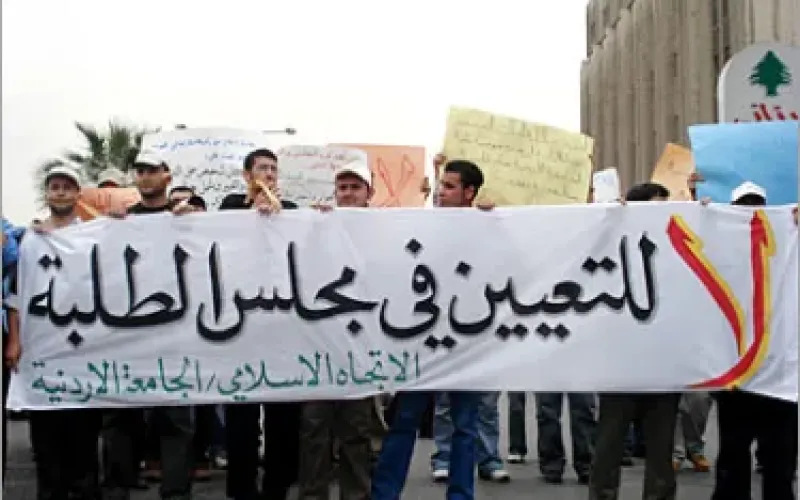
The University of Jordan on Tuesday launched the voting process for its Student Union elections, held under new regulations that have sparked criticism from student activists and rights advocates over what they describe as a decline in democratic life on campus.
According to the union’s bylaws and electoral regulations, the Student Union is composed of elected members chosen through a free and secret ballot system, alongside a number of appointed members representing female students, students with disabilities, and international students. The university says the mechanism is intended to broaden participation and ensure representation of different student groups within the council.
The union is tasked with representing students before the university administration and advocating for their concerns in line with the institution’s regulations and objectives. It also aims to strengthen cooperation between students and the administration, while supporting academic, cultural, social, athletic, and volunteer activities, in addition to promoting dialogue, respect for differing opinions, and rejection of tribalism and discrimination.
The elections are being conducted on two levels. The first covers faculty-level elections through a closed proportional list system, while the second allocates 14 seats for university-wide lists under an electoral mechanism aimed at ensuring fair student representation.
A total of 473 candidates are contesting the elections, including 360 male students and 113 female students. Of these, 14 candidates are running on university-wide lists, while 459 candidates are competing at the faculty level.
Four university-wide lists initially registered for the elections, though only one completed the nomination process, while three failed to meet the required conditions. At the faculty level, 132 lists registered, with 112 completing the nomination requirements and 20 failing to do so.
More than 54,000 students are eligible to vote, including 48,207 Jordanian students and 6,099 international students. Female students constitute the majority of voters, with 34,648 eligible voters compared to 19,658 male students. The university allocated 59 ballot boxes for the electoral process.
The university stressed its commitment to ensuring a fair and transparent voting environment that guarantees students’ freedom of choice, while also taking measures to facilitate participation for students with disabilities.
However, the elections have drawn criticism from student rights advocates and political student groups.
Dr. Fakher Daas, coordinator of the National Campaign for Student Rights “ThabahToona,” argued that this year’s elections reflect a deterioration in democratic life within Jordanian universities. He criticized recent amendments to the union regulations that allow college deans to appoint up to 18 percent of union members.
Daas said this year’s electoral scene lacks the energy and engagement seen in previous years, pointing to limited media coverage and declining student interest as indicators of weakening confidence in the electoral process.
He added that several student blocs chose to boycott the elections in protest against the amendments, arguing that the changes have undermined the union’s representative role and weakened political participation on campus.
Daas also criticized what he described as a growing tendency among university administrations to view student elections as a burden, accusing some administrations of attempting to limit the influence of student groups and reduce their role in university decision-making.
He called for revisiting the electoral system, including abolishing appointed seats within the union, restoring annual elections instead of the current two-year cycle, reforming disciplinary regulations, and expanding space for student freedoms and activism.
According to Daas, representation for female students and students with disabilities can be achieved through democratic electoral mechanisms rather than appointments, stressing that genuine reform of student political life requires serious commitment from university administrations.
Meanwhile, Rakan Al-Tabbaa, a member of the “Arab Renewal” student list, said the boycott by several student groups was intended as a protest against the introduction of appointed seats into the union structure, which he argued undermines the essence of democratic representation at the university.
Al-Tabbaa stated that allowing appointed members “diminishes students’ right to freely choose their representatives,” describing the boycott not as a withdrawal from student activism, but rather as “a defensive stance in support of the student movement.”
He noted that students would still participate in voting despite the existence of seats “they did not choose,” arguing that this weakens the legitimacy of representation within the union.
He further called for reversing the appointment system and opening serious dialogue with student groups as key partners in university life.
Al-Tabbaa added that the issue extends beyond the recent amendments, pointing to what he described as “a broader climate restricting student activism and weakening its independence.” He stressed that student freedoms and organization should form an essential part of university life.
He also argued that student representation should be based on a candidate’s ability to express student concerns and defend their rights, rather than solely on academic performance, criticizing the mechanism by which appointed students are selected by college deans.
He concluded by saying that students “are rights holders, not merely numbers in an electoral scene,” calling for a review of the latest regulations and the launch of dialogue aimed at restructuring the legislative framework governing student unions and campus political activity.