- عدد اللاجئين السوريين العائدين طوعا من الأردن إلى سوريا، منذ 8 كانون الأول 2024 وحتى 24 آب 2026، يصل إلى نحو 220 ألف لاجئ مسجل لدى المفوضية السامية للأمم المتحدة لشؤون اللاجئين
- طائرة تابعة لسلاح الجو الملكي الأردني تخلي طفل أردني يبلغ من العمر 6 سنوات، بعد تعرضه لحادث سير في دولة الإمارات العربية المتحدة
- وفاة فتاة إثر سقوطها عن الطابق الخامس في إحدى عمارات ضاحية الأمير حسن بالعاصمة عمّان، ليلة الخميس، وفق مصدر أمني
- إصابة سيّدتان فلسطينيتان وطفلة تبلغ من العمر 14 عاما بجروح برصاص قوات الاحتلال الإسرائيلي، الليلة الماضية، في بلدة الكرمل جنوبيّ الخليل
- هيئة مقاومة الجدار والاستيطان الفلسطينية تقول إنّ سلطات الاحتلال الإسرائيلي، استولت، بموجب أمر عسكري جديد على 15.342 دونما من أراضي مدينة البيرة وسط الضفة الغربية المحتلة، بهدف إقامة ما يسمّى بـ"مسار أمني"
- يكون الطقس حارا نسبيا في أغلب المناطق، وحارا جدا في البادية والأغوار والبحر الميت والعقبة
Despite Government Assurances, Jordanians Shift Focus from Availability to Affordability Amid Regional Tensions
03/26/2026 - 13:26
Despite repeated government reassurances about the abundance of food supplies in local markets, Jordanians’ concerns have shifted from availability to affordability, amid rapid regional developments and tensions stemming from the US-Israel-Iran conflict and its potential impact on supply chains and energy prices.
Estimates from the Department of Statistics indicate poverty rates approaching 24%, while unemployment exceeds 21%, directly influencing consumption behavior and prompting many citizens to reprioritize household spending.
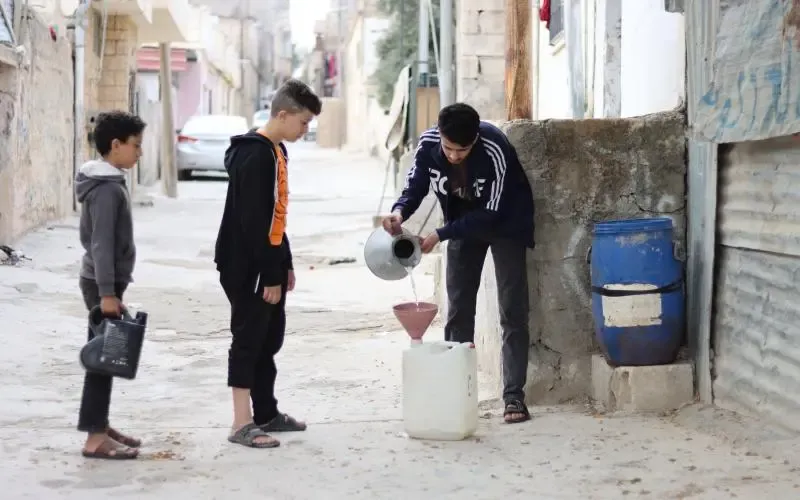
This reality is reflected in consumer behavior, with some citizens stockpiling essential goods and fuels in anticipation of price increases, while others reduce consumption out of fear of rising costs.
Field observations show a range of responses. One woman reported storing essential food items such as canned goods, sugar, rice, and cooking oil. She noted that others were also stockpiling kerosene, gas cylinders, flour, and water. Conversations with taxi drivers revealed that many have started storing water and dates, while noting noticeable increases in prices across a variety of food items, including dairy, vegetables, and fruits.
Meanwhile, a male citizen expressed frustration over high prices, stating that his income no longer covers basic needs. As a taxi driver reliant on daily earnings, he cannot stockpile goods, explaining, “Our livelihood is day-to-day.”
Another resident said he prefers purchasing essentials as needed, emphasizing that nearly all goods have become expensive. He added that many rely on daily work to secure their livelihood, some resort to borrowing, while others stockpile out of fear of further price hikes due to regional instability. He highlighted sharp increases in meat and poultry prices, noting that meat costs range from 8 to 10 dinars per kilogram, with local varieties priced even higher.
Conversely, a woman stated that she does not stockpile any goods due to limited income, adding, “I buy only what I need and do not support stockpiling, though consumption can be rationalized given the difficult economic conditions.” Another resident echoed this view, arguing that purchases should follow a normal weekly or monthly routine based on household capacity, noting that additional storage is unnecessary given high prices and limited income.
The Ministry of Industry, Trade, and Supply confirmed that strategic reserves of essential commodities in Jordan are sufficient for six to eight months, particularly wheat, barley, rice, and sugar, emphasizing that local markets receive a steady supply without interruptions.
Protective Instincts and Declining Income
Economist and academic Dr. Qassem Al-Hamouri explained that stockpiling behavior is a natural response driven by self- and family-preservation instincts in the context of regional wars and destruction. Access to candles or fuel-powered lamps provides psychological reassurance without creating a major financial burden.
Dr. Al-Hamouri noted that advice against stockpiling may not resonate widely, as citizens are influenced by observations of blockade and scarcity in neighboring areas, though Jordan benefits from relatively secure import routes via the Red Sea and land crossings.
He highlighted that Jordanians’ purchasing power has been declining for 15 years, with roughly 70% of households living day-to-day. He warned against unsafe stockpiling of fuels and stressed prioritizing high-nutrition, long-lasting items such as dates and legumes over perishable goods like meat.
He emphasized that public safety must come first, urging families to avoid storing hazardous materials like gas cylinders or gasoline unsafely, as harm arises from poor storage, not the conflict itself.
Merchant Behavior and Price Increases
Dr. Al-Hamouri observed unjustified price hikes, with some items doubling in price despite prior storage, and noted attempts to raise prices on basic goods during certain occasions. He attributed this to entrenched commercial culture among some merchants, who view any event or season as an opportunity for higher profits. He stressed that citizen awareness is key, advising consumers to avoid buying goods when prices rise unjustifiably, as boycotts can be more effective than government oversight in curbing inflation.
The Ministry of Industry and Trade has conducted thousands of monitoring visits in recent months, issuing hundreds of fines to merchants who raised prices without justification and urging citizens to report violations. Lawmakers also emphasized the need for market oversight and anti-monopoly measures, calling on the government to take strict action to control prices amid regional tensions.
Warnings Against Fuel Stockpiling
Official authorities have taken a firm stance against home gasoline storage, with the Energy and Minerals Regulatory Commission prohibiting the sale of gasoline in containers and warning that storing petroleum products poses serious safety risks. The measure aims to ensure sustainable supply in local markets and prevent panic buying, with citizens urged to follow official guidelines.
Energy expert Hashim Aql reassured citizens that strategic reserves are sufficient, with contingency plans in place for potential shortages. Jordan has not faced any restrictions on gasoline, petroleum products, or electricity consumption, and supply remains stable due to the secure reserves.
Aql warned that storing gasoline in non-approved plastic containers at homes or farms is extremely dangerous, exposing lives to fire or explosion risks. Panic buying exacerbates supply pressures despite the material being readily available at fuel stations with no quantity restrictions.
Regarding monthly pricing, Aql explained that Jordan’s monthly fuel pricing protects citizens from daily price fluctuations, unlike systems in other countries. He noted that with oil prices reaching $120 per barrel, monthly pricing has significantly mitigated volatility.
He expects April’s fuel prices to increase by more than 30% and anticipates government intervention to absorb part of the hike, limiting the impact on consumers. While current global oil prices hover around $100 per barrel with expected fluctuations, Aql noted that even if the global conflict ended today, prices would not return to previous levels of $60–70 per barrel for about two months.
Energy Availability and Stability in Jordan
Aql confirmed that there is no energy crisis in Jordan and that any price increases reflect a global trend, not a domestic shortage. Supply lines are well-secured, with crude oil imported from Iraq and Saudi Arabia, and refined petroleum from Saudi Arabia and Mediterranean countries via the Suez Canal.
Strategic reserves of all petroleum products remain intact, with no depletion and no supply shortages. When gas from the Mediterranean for electricity generation was interrupted, reserves were used along with local alternatives such as heavy fuel oil and diesel. While these alternatives raise electricity generation costs by approximately 2 million dinars daily, they do not affect supply continuity or energy availability.
Previous government statements indicate that fuel reserves in Jordan cover roughly 30 days, with continuous reinforcement under emergency plans to ensure uninterrupted supply.