- عدد اللاجئين السوريين العائدين طوعا من الأردن إلى سوريا، منذ 8 كانون الأول 2024 وحتى 24 آب 2026، يصل إلى نحو 220 ألف لاجئ مسجل لدى المفوضية السامية للأمم المتحدة لشؤون اللاجئين
- طائرة تابعة لسلاح الجو الملكي الأردني تخلي طفل أردني يبلغ من العمر 6 سنوات، بعد تعرضه لحادث سير في دولة الإمارات العربية المتحدة
- وفاة فتاة إثر سقوطها عن الطابق الخامس في إحدى عمارات ضاحية الأمير حسن بالعاصمة عمّان، ليلة الخميس، وفق مصدر أمني
- إصابة سيّدتان فلسطينيتان وطفلة تبلغ من العمر 14 عاما بجروح برصاص قوات الاحتلال الإسرائيلي، الليلة الماضية، في بلدة الكرمل جنوبيّ الخليل
- هيئة مقاومة الجدار والاستيطان الفلسطينية تقول إنّ سلطات الاحتلال الإسرائيلي، استولت، بموجب أمر عسكري جديد على 15.342 دونما من أراضي مدينة البيرة وسط الضفة الغربية المحتلة، بهدف إقامة ما يسمّى بـ"مسار أمني"
- يكون الطقس حارا نسبيا في أغلب المناطق، وحارا جدا في البادية والأغوار والبحر الميت والعقبة
Aqaba Emerges as a Model for Inclusive Tourism, with Hopes of Expanding the Experience to Other Sites

08/27/2026 - 13:49
Making tourist sites accessible to persons with disabilities is no longer simply a matter of providing a ramp or accessible entrance. It increasingly means enabling visitors to experience tourism fully, safely and independently, from reaching the site and moving around it to using its facilities and services, accessing the beach and taking part in the activities available there.
People with disabilities say adapting tourist sites is an essential step toward strengthening their right to tourism and recreation. They are calling for accessibility standards to be applied across tourist destinations throughout the kingdom rather than being limited to a small number of projects.
Accessibility is not confined to physical infrastructure. It encompasses every aspect of the tourism experience, including pathways, restrooms, access to the beach, information and directional signs, communication methods and services designed to meet the needs of people with different disabilities.
These efforts fall within the framework of Law No. 20 of 2017 on the Rights of Persons with Disabilities, which includes provisions on making the environment, public facilities and services accessible to persons with disabilities, reinforcing the principles of equality and their right to access and participate.
The Ministry of Tourism and Antiquities says inclusive tourism is part of the broader concept of tourism that is accessible to everyone. It contributes to greater equality and makes tourist destinations more suitable for different segments of society.
Aqaba, a Practical Example of Inclusive Tourism
Against this backdrop, the Aqaba Marine Park stands out as a practical example of inclusive tourism through its Accessible Beach and Inclusive Park project. The initiative aims to improve access to natural and tourism facilities for persons with disabilities as part of a broader effort to establish Aqaba as an inclusive city.
Speaking to AmmanNet, Hakam Al-Qassous, executive director of Accessible Jordan, says the project to adapt the Aqaba Marine Park was designed to provide a more inclusive experience for persons with disabilities.
She describes the initiative as a significant experience for Aqaba that has helped broaden the discussion around adapting tourism and natural sites to make them accessible to everyone.
Al-Qassous says the company approached the Aqaba Special Economic Zone Authority to carry out the accessibility works and received cooperation from the authority. The goal was to create an accessible beach that could serve as a model for similar initiatives elsewhere in Jordan and the region.
The adaptations took into account the needs of people with physical, hearing and visual disabilities, rather than focusing on a single group. The objective was to create an integrated experience instead of introducing separate facilities for each type of disability.
Among the improvements was the addition of QR codes to information and directional signs throughout the site. Visitors can scan the codes to access sign-language content explaining information about the marine park, its pathways and facilities, making the information available on site more accessible to visitors with hearing disabilities.
The project also included adapting pathways for people with visual and physical disabilities and creating an inclusive children’s playground where children with different abilities can play together in the same environment.
Other improvements included accessible facilities and services, including adapted restrooms. Work is also underway to provide fully accessible changing rooms for persons with disabilities at the beach.
Access to the Sea
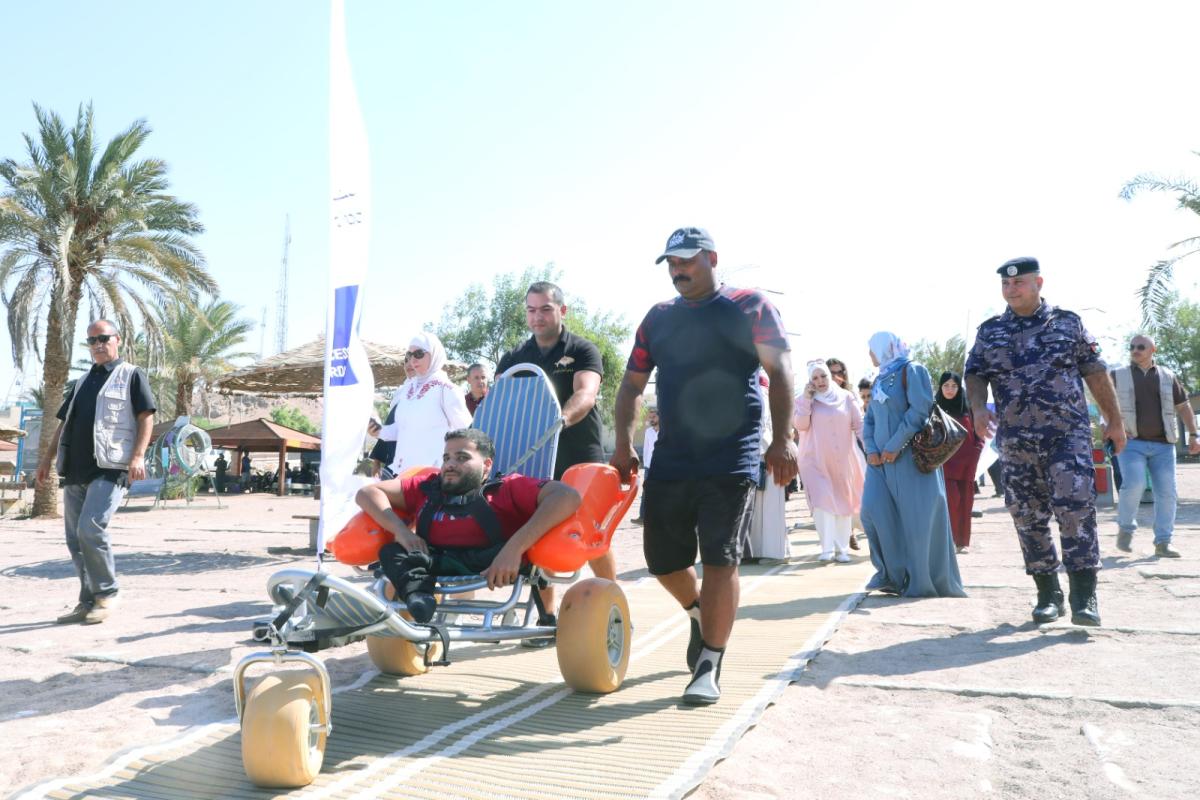
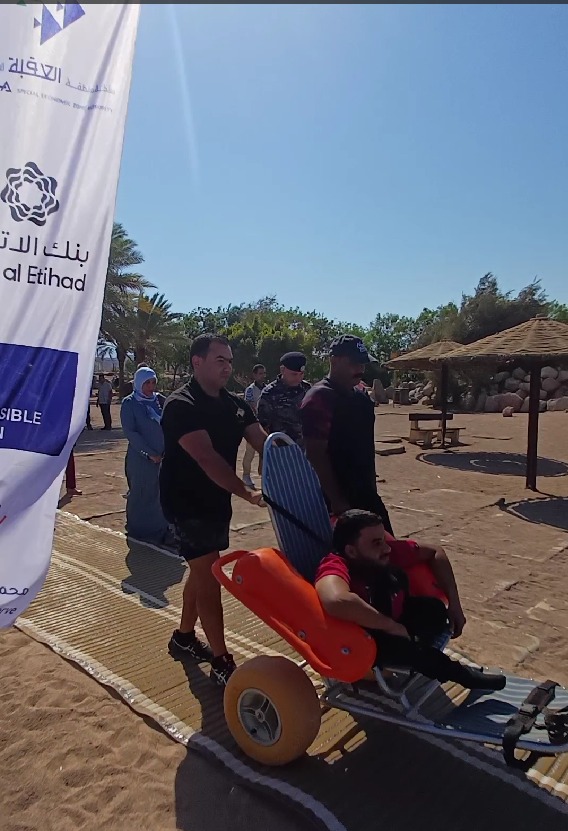
Accessibility does not stop at the shoreline. Al-Qassous says specially designed chairs have been provided to allow people with physical disabilities to enter the water. Other beach chairs are also available for use on the sand and can accommodate older people and visitors who do not wish to enter the water.
Special pathways and beach mats have also been installed leading toward the sea. Made from materials that allow wheelchairs to move across them more easily, they provide users with safer and more independent access to the swimming area.
Al-Qassous says the project was built around a comprehensive approach to accessibility, taking into account different types of disabilities rather than relying on separate solutions for each group.
Dr. Nidal Al-Aouran, Commissioner for Environment and Public Safety at the Aqaba Special Economic Zone Authority, says the significance of the project goes beyond adapting a beach and playground. Its broader purpose is to establish the principle that the Aqaba Marine Park is a place for everyone.
He says the improvements included accessible sanitary facilities, QR codes on information signs providing access to sign-language content, equipment for visitors with visual disabilities, and a 100-meter accessible wheelchair pathway extending to the swimming area.
The project also provides floating wheelchairs designed for use in the water, as well as a specially equipped caravan for changing clothes.
Al-Qassous believes the success of the Aqaba experience could provide a model for introducing inclusive tourism at other destinations. She hopes similar projects can be developed in other tourist areas, including the Dead Sea.
She explains that when the project began, some institutions did not have a clear understanding of what adapting beaches and natural sites for accessibility involved. Seeing the results on the ground, however, helped build greater awareness of the value of accessibility and encouraged calls to replicate the experience elsewhere.
The goal, she stresses, is not simply to provide accessible facilities, but to enable people with disabilities to live their lives normally and enjoy tourism and recreational spaces as a basic right, just like everyone else.
Al-Aouran says the project represents the beginning of a broader effort to establish the concept of an inclusive Aqaba, in which the city’s facilities and services are accessible to all members of society, including persons with disabilities, children and older people.
The authority, he adds, is working to expand inclusive initiatives throughout Aqaba in partnership with the private sector and civil society organizations.
Infrastructure Alone Is Not Enough
According to Al-Qassous, inclusive tourism requires more than physical infrastructure. It must also be accompanied by greater awareness among tourism workers about how to interact with and assist people with disabilities.
As part of that effort, a training course was held for 28 people from different institutions in Aqaba. The course covered disability etiquette, appropriate terminology, communication methods and how to provide assistance.
A field assessment and training program were also conducted for tourism-sector workers in Aqaba. People with different disabilities were involved in assessing existing facilities and identifying gaps, giving the intended beneficiaries themselves a role in shaping and improving the services designed for them.
Alongside the development of facilities, Al-Qassous stresses that maintaining them is a shared responsibility involving government bodies, institutions and citizens.
She notes that some accessible facilities in Aqaba have been vandalized, requiring repeated maintenance and repairs.
She calls for greater public awareness of the importance of protecting these facilities as resources that belong to everyone. Accessibility projects require financial resources, she says, noting that the Accessible Beach and Inclusive Park project received support from Bank al Etihad and Al-Moasron Group.
The Aqaba Marine Park offers a practical example of what inclusive tourism can look like on the ground. The broader challenge now is to move beyond an individual project and turn the experience into a wider approach, so that access to tourism is not a privilege available only at selected locations, but a right that people can exercise across Jordan.