Climate Change… When Drought Becomes a Gateway to Migration
From Northern Jordan to the Shores of the Mediterranean: Young People Fleeing Thirsty Land
11/25/2025 - 11:41
الرابط المختصر
In recent years, climate change has ceased to be a matter of numbers and sterile scientific reports. For me—as a journalist who has spent years tracking how climate shapes people’s lives—it has become a collection of human stories whose protagonists I know personally.
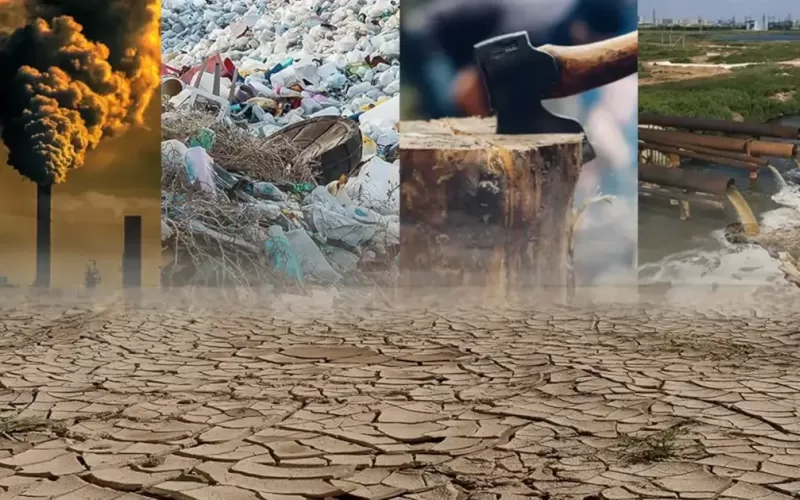
In northern Jordan, I have documented in field reports how drought swallowed entire harvest seasons, and how once–fertile vegetable and wheat plains have turned into exhausted lands that no longer yield as they did for generations.
In these villages, agriculture has lost its most precious asset: its youth. Thousands of young men who once sustained the fields walked away when the land could no longer sustain them. Many placed their last shovel on a mound of dry soil and made the hardest decision of their lives: migration. A large number embarked on irregular routes toward Europe or the United States—journeys full of uncertainty and danger—in search of opportunity and dignity their thirsty land could no longer provide.
This trend is not isolated. In related reports, a broader picture of Jordan’s new migration wave has emerged: young people escaping economic stagnation, and others ending up fighting in Russia after being trapped in a cycle of poverty and unemployment. Both paths—whether through Jordan’s parched farmlands or toward foreign battlefields—reflect the fragility of systems that push young people to extreme choices when development and jobs are absent.
Climate change is not a passive backdrop; it is an active force reshaping livelihoods and redrawing migration routes across the southern Mediterranean.
When land loses its fertility, when water dwindles, when productivity collapses, young people become the first victims. Irregular migration is not a romantic adventure—it is an inevitable outcome of an economic and environmental landscape that has failed to retain its most valuable resource.
This is why linking climate and migration is essential for any serious conversation about the future—especially in southern Mediterranean countries such as Jordan, Tunisia, Morocco, Algeria, Egypt, and Libya.
On Thursday, I will take part in the launch ceremony of the Charter for the Mediterranean in Barcelona—a milestone event that redefines cooperation between the two shores of the sea based on shared challenges and shared ambitions.
The Charter is a new framework for building a more connected, prosperous, resilient, and secure Mediterranean space. It is based on the principles of co-ownership, co-creation, and shared responsibility, with a strong focus on concrete initiatives that deliver real benefits for people and economies.
What stands out most in this Charter is its strong emphasis on youth and climate change—two pillars deeply connected to irregular migration. No meaningful reform can take shape without addressing the roots of migration: climate vulnerability, lack of opportunities, food security, and inclusive economic development. The countries most affected by climate change are, ironically, those least responsible for causing it.
Although southern Mediterranean countries bear the brunt of these crises, they are not historically responsible for the pollution that triggered global warming. This is where the idea of climate justice becomes essential: Why should the least-polluting societies pay the price for the mistakes of industrial giants? Why are southern countries expected to manage the consequences of a crisis they did not create?
For this reason, placing youth and climate at the heart of public policies in southern Mediterranean countries is not a luxury—it is a necessity. Together, they represent both the core of the problem and the core of the solution. Irregular migration does not begin on the beaches of the Mediterranean, where boats race against the waves. Migration begins inland: in the dried-up farmlands, in the small projects that never received support, in the outdated classrooms, and in economies that failed to integrate into a changing world.