
Tahboub: Job Creation Figures Fall Short of ‘Decent Work’ Standards; Government is Managing the Crisis, Not Solving It
01/07/2026 - 11:06
الرابط المختصر
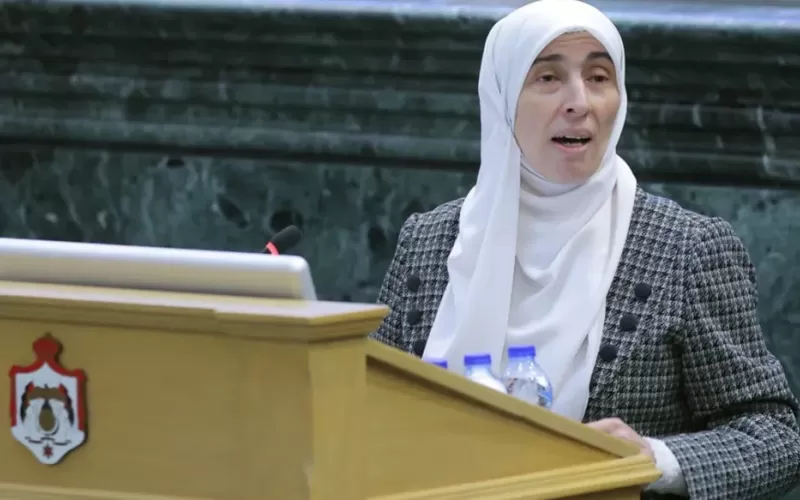
MP Dima Tahboub has stated that Prime Minister Dr. Jafar Hassan is making commendable efforts to repair the breach caused by the relevant ministry’s response during the parliamentary debate on the issue of "decent work." She emphasized that the relationship between herself and the Prime Minister, while limited in terms of direct communication, is founded on mutual respect and professional engagement. Tahboub clarified that she received two official files from the Prime Minister, via his office director, detailing the jobs created during 2024 and 2025. She expressed her appreciation for the government's professionalism in providing this data, viewing it as an initial step toward rectifying the defect that accompanied the Ministry’s previous reply in the House of Representatives.
In a statement accompanied by the official documents, Tahboub asserted that the sheer number of created jobs represents only one single standard out of six internationally recognized criteria for evaluating "decent work." She stressed that the right of a Jordanian citizen is not limited to merely obtaining a job, but extends to securing work that guarantees a dignified life. This includes a fair income, job security, social security coverage, and health insurance, as well as the alignment of the job with the individual's qualifications. Furthermore, she highlighted the necessity of professional development opportunities, a safe working environment, reasonable working hours, sick and annual leave, non-discrimination in wages, freedom of union organization, and the full protection of workers' rights.
The MP added that the government’s response focused primarily on raw job creation figures without linking them to unemployment indicators, the sustainability of these job opportunities, or the widening gap between educational outputs and labor market needs. She considered that this approach fails to reflect the true magnitude of the economic challenge facing the Jordanian economy. According to the government data provided, the net number of jobs created reached 96,420 in 2024 and 48,403 in the first half of 2025. However, Tahboub argued that these numbers do not signify a fundamental decline in unemployment rates, explaining that a significant portion of these roles came as replacements for lost jobs and that the majority were concentrated in low-value-added sectors, failing to address the unemployment of educated youth or women.
In her assessment of the figures compared to Jordan's needs, Tahboub pointed out that the majority of jobs were concentrated in the wholesale and retail trade and services sectors. She described these sectors as "fragile," characterized by low wages and high employee turnover, which implies that employment has not evolved into a true productivity lever for the economy but has remained within the framework of temporary "subsistence employment." Regarding youth employment, she explained that the age group between 20 and 29 years old absorbed more than 86 percent of the jobs, yet these are positions that do not build long-term career paths. Meanwhile, age groups over forty are losing their jobs in the absence of effective policies to reintegrate them into the labor market.
Regarding women's participation, Tahboub drew attention to a concerning decline from 30.7 percent in 2024 to 14.8 percent during the first half of 2025, despite women constituting the highest percentage of university degree holders. She views these figures as a reflection of failure in economic empowerment policies and a regression rather than an improvement. On the file of geographic justice, she indicated that the capital, Amman, acquired between 56 and 58 percent of the newly created jobs, in contrast to an almost complete absence of governorates such as Ajloun and Balqa. This, she noted, indicates a lack of decentralized employment policies and a deepening of the developmental gap between the governorates.
The MP also pointed to a "repulsive" operational pattern, noting that more than half of those who left their jobs—at a rate ranging between 53 and 57 percent—did so due to the distance of the workplace, the length of working hours, or unsuitable working conditions. This confirms the limited viability of the current government solutions. According to her estimation, the Jordanian labor market requires between 100,000 and 120,000 new jobs annually to cover new entrants to the market, compensate for lost jobs, and reduce accumulated unemployment. In contrast, what the government has actually provided does not achieve a surplus in job opportunities, does not genuinely lower unemployment, and does not effect a change in the market structure.
Tahboub concluded that the government's current actions fall within the framework of crisis management rather than a radical solution. While welcoming continued discussion on this file and reiterating her thanks to the Prime Minister for the data, she expressed her confidence that the government's detailed response to her parliamentary interpellation would be comprehensive and clear. She emphasized that waiting for this response is no longer limited to her alone, but is a sentiment shared by a large number of the Jordanian people.
Background
These statements follow the submission by MP Dima Tahboub of the longest interpellation in the history of the Jordanian House of Representatives, in which she directed 100 questions to the Minister of Labor regarding the implementation of decent work standards. These standards include six criteria: general policies and employment standards; wages and the minimum wage; social protection and social security; labor law and recent amendments; trade unions and social dialogue; and finally, public safety, occupational health, and law enforcement.
The submission of Tahboub’s interpellation came one day after the discussion of the decent work question under the parliamentary dome in the supervisory session held yesterday, Monday. Tahboub converted her question into a formal interpellation due to the insufficiency of the government's answer and her lack of conviction regarding the government's achievements in the field of decent work. The parliamentary session had witnessed widespread controversy due to the response of Minister of Labor Khaled Al-Bakkar to Tahboub’s question under the dome, which was described as harsh and offensive by members of the council.